DevOps represents a cultural and technical movement that emphasizes collaboration, automation, and integration between software development and IT operations teams. The goal is to shorten the development lifecycle and provide continuous delivery of high-quality software. DevOps combines development (Dev) and operations (Ops) to create a unified approach to software delivery. Students learn to master essential tools and practices for continuous integration (CI) and continuous delivery/deployment (CD), including version control systems, containerization, orchestration, monitoring, and automation frameworks. The curriculum covers the entire DevOps toolchain from code commit to production deployment.
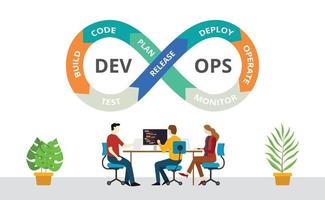
In today's fast-paced software development environment, DevOps has become essential for organizations aiming to deliver software quickly and reliably. Traditional development and operations silos created bottlenecks that slowed down software delivery. DevOps breaks down these barriers, enabling teams to collaborate effectively and automate repetitive tasks. This approach reduces deployment failures, improves software quality, and accelerates time-to-market. With the rise of cloud computing and microservices architecture, DevOps practices are crucial for managing complex, distributed systems. Learning DevOps is vital because it addresses the growing demand for faster, more reliable software delivery in an increasingly competitive digital landscape.
DevOps is used across the software development lifecycle in various industries. Technology companies use DevOps to accelerate product development and deployment. Financial institutions implement DevOps for secure, compliant software delivery. E-commerce platforms rely on DevOps for continuous updates and feature releases. Healthcare organizations use DevOps for reliable medical software deployment. Even traditional industries leverage DevOps for digital transformation initiatives. DevOps enables automated testing, continuous integration, infrastructure as code, and monitoring. It supports agile development methodologies and enables organizations to respond quickly to market changes.
The future of DevOps is promising with emerging trends like GitOps, DevSecOps, and AI-assisted operations. As organizations continue to adopt cloud-native architectures, DevOps expertise will remain in high demand. Career opportunities include DevOps engineer, site reliability engineer (SRE), and platform engineer roles. The field's evolution towards DevSecOps and MLOps will create new specializations. Remote work opportunities and global demand make DevOps a future-proof career choice. Continuous innovation in tools and practices ensures lifelong learning opportunities.
The benefits of DevOps expertise are substantial and career-enhancing. High earning potential with competitive salaries. Job security in a field with growing demand. Opportunities to work with cutting-edge technologies and tools. Improved work-life balance through automation. Contribution to faster, more reliable software delivery. Strong collaboration and communication skills development. Foundation for leadership roles in technology teams.
Successful DevOps training leads to proficiency in CI/CD pipelines. Ability to automate software delivery processes. Strong understanding of infrastructure as code and containerization. Practical experience with monitoring and logging tools. Industry-recognized certifications and credentials. Competitive advantage in job markets. Foundation for advanced DevOps specializations and leadership roles.
 Dps
Dps